
This article was first published on the UbuntuNet Alliance’s website.
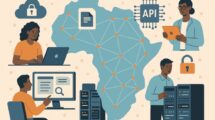
 UbuntuNet Alliance is pleased to share continued progress and growing impact from the Research4Life & UbuntuNet Alliance Federated Access Pilot Project, an initiative established to expand secure, seamless access to Research4Life resources through institutional Single Sign-On (SSO) across East and Southern Africa. The project, coordinated by Research4Life with technical collaboration from UbuntuNet Alliance, member National Research and Education Networks (NRENs), was launched with support from GÉANT and Friends of Research4Life.
The pilot was designed to enable universities and research institutions to authenticate directly to Research4Life using their home identity providers, aligning Africa’s research access environment with global federation standards. Since coordination formally began, partner teams have worked through a structured technical roadmap that included validating identity provider metadata and attributes from UbuntuNet members, upgrading Research4Life’s LDAP User Manager and CRM systems, and enhancing the SAML Service Provider to support multiple identity providers. These foundational tasks have been completed successfully and form the backbone of the platform now in use.
Following production configuration and exchange of final trusted metadata sets between Research4Life and participating NRENs, the solution went through user-based validation and portal customization. The authentication flow now allows users to securely select their institution from a supported list and log in using familiar campus credentials. This step marked a critical operational shift from test environments to live institutional onboarding, positioning the pilot for scale.
As of 1 December 2025, the onboarding phase has reached a notable milestone: 66 institutions across 15 countries have been fully onboarded onto the Research4Life SSO platform. The strongest participation is coming from Africa, with especially strong momentum in UbuntuNet member countries. Kenya and Malawi each account for eleven onboarded institutions, Tanzania has onboarded ten, Uganda five, and Botswana four, while Rwanda and Zambia have each onboarded one so far. This growth reflects both the success of the pilot approach in our region and the readiness of institutions to adopt federation-based access models.
The impact of this achievement is already meaningful. By enabling SSO, the project reduces authentication friction, strengthens security, and improves the user experience for researchers, students, lecturers, and clinicians. For institutions in East and Southern Africa, this translates into simpler access to peer-reviewed journals, evidence-based health literature, and teaching resources, supporting stronger research output and better learning outcomes. At a regional level, onboarding also improves reporting and visibility of Research4Life usage through NRENs, contributing to more informed planning and investment in research and education connectivity.
While the pilot continues to prioritise East and Southern Africa, a small number of technically eligible institutions outside the region have also been onboarded. This confirms that the project’s standards-based framework is globally scalable, while remaining firmly anchored in the needs and leadership of African research and education networks.
UbuntuNet Alliance, together with Research4Life and member NRENs, will now build on this momentum by completing onboardings currently in progress, expanding participation across more member countries, and strengthening aggregation of institutional onboarding statistics per country and NREN. As adoption grows, UbuntuNet Alliance will continue highlighting institutional successes and the wider value of federated access in enabling equitable, reliable research connectivity across the region.
Institutions that are not yet onboarded and wish to join the programme are encouraged to engage their national NREN or contact UbuntuNet Alliance directly. Through this collective effort, UbuntuNet Alliance and partners are advancing a future where access to knowledge is secure, seamless, and sustainable for the communities that depend on it most.